
Quick answer
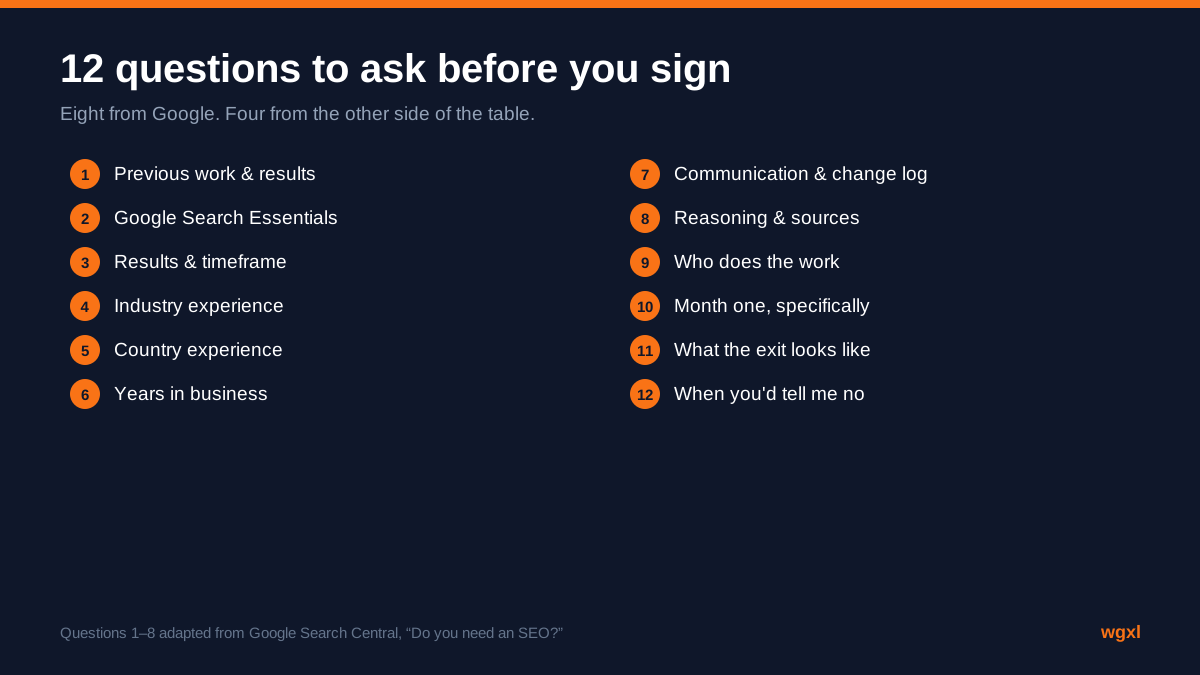
Ask twelve questions before you sign with an SEO agency. Eight come from Google itself: show me your previous work, do you follow Google Search Essentials, what results do you expect and in what timeframe, what is your experience in my industry and my country, how long have you been in business, how will you communicate changes, and will you explain the reasoning behind your recommendations. Four more come from having sat on both sides of the table: who actually does the work, what happens in month one, what does the exit look like, and what would make you tell me not to hire you. Any agency that guarantees a #1 ranking has already answered the only question that matters.
Why this list exists
Most “questions to ask an SEO agency” articles are written by SEO agencies, and they are careful to only ask questions they can answer well.
This one leans on a source with no commercial interest in your decision. Google publishes its own guidance on hiring an SEO, and it is blunter than anything an agency will tell you. We have used Google’s list as the spine and added four questions from our own experience of being hired, being fired, and inheriting sites from agencies that should have been fired sooner.
The eight questions Google tells you to ask
1. Can you show me examples of your previous work and some success stories?
A good answer names clients, names the metric, and names the timeframe. “We grew traffic significantly” is not an answer. “Organic traffic up 294% in eight months for an academic publisher” is.
A bad answer shows you a dashboard screenshot with the client’s name blurred out and no dates.
2. Do you follow Google Search Essentials?
A good answer is yes, immediately, followed by an example of something they refused to do because of it.
A bad answer is a lecture about how Google’s guidelines are “just suggestions.”
3. What results do you expect, in what timeframe, and how do you measure success?
A good answer separates leading indicators (indexation, rankings, impressions) from lagging ones (leads, pipeline, revenue), and gives you honest windows for each. SEO does not produce revenue in month one, and anyone who says it does is selling you something else.
A bad answer promises a number.
4. What is your experience in my industry?
Google explicitly tells you to ask this. It matters more than most agencies admit: the difference between ranking a dental clinic and ranking an academic publisher is not the tactics, it is knowing how the buyer searches.
5. What is your experience in my country or city?
Ask this hard if you sell in Europe. Search behaviour, language, and buying culture differ across markets, and an agency that has only ever ranked US pages will apply US assumptions to a German buyer.
6. How long have you been in business?
Short tenure is not disqualifying. Hiding it is.
7. How will we communicate, and will you share every change you make to my site?
A good answer includes a named person, a cadence, and a written change log.
A bad answer is “you’ll have access to the dashboard.”
8. Will you explain the reasoning behind your recommendations?
Google adds a pointed sub-question here: does the agency cite official Google documentation as supporting evidence? And if they sell AEO or GEO services, does their advice line up with Google’s official guidance on optimising for generative AI features? That last one is new, and it is a useful filter in 2026. A lot of “AI SEO” advice is invented.
Google’s three red flags
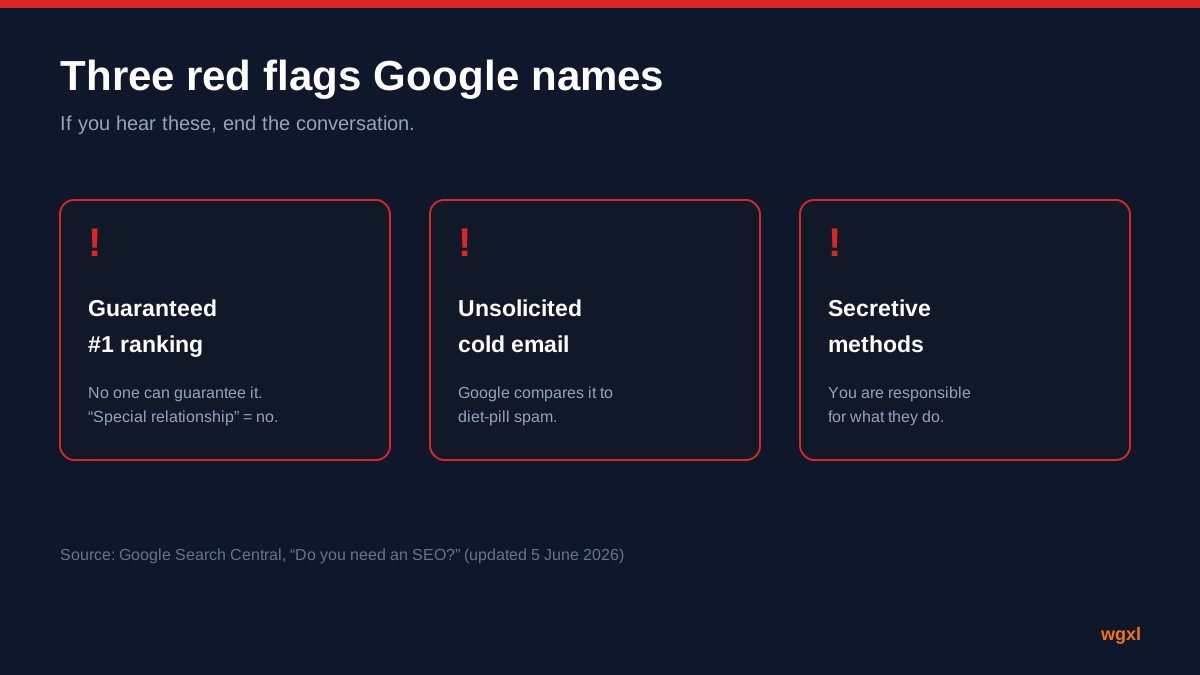
Google is unusually direct about what should end the conversation.
Nobody can guarantee a #1 ranking. Google’s position is that you should beware of SEOs who guarantee rankings, claim a “special relationship” with Google, or advertise a “priority submit.” There is no priority submit. There is no special relationship. Google states plainly that paying for Google Ads has no effect on organic rankings.
Be wary of agencies that email you out of the blue. Google’s documentation compares unsolicited SEO email to “burn fat at night” diet pills. We did not write that. They did.
Be careful if a company is secretive about what it intends to do. And here is the part most buyers miss: Google says you are responsible for the actions of any company you hire. If an agency creates deceptive content on your behalf, your site can be removed from the index. Not theirs. Yours.
One more practical note from the same page: if an agency offers an audit, grant them read access to Search Console at that stage — not write access.
The four questions we would add
9. Who actually does the work?
The person who wins the pitch is frequently not the person who does the work. Ask for the name and seniority of whoever will touch your site. Ask what else is on their plate.
At WGXL the answer is that Shivam leads strategy on every engagement. That is a constraint on how many clients we take, and it is deliberate.
10. What happens in month one, specifically?
Not “we do an audit.” What will exist at the end of week four that does not exist today? A good agency can tell you, because they have done it thirty times.
11. What does leaving look like?
Ask before you join. Who owns the content, the data, the dashboards, the schema, the page templates? If an agency will not commit in writing that you own everything they build, that is the answer to the question.
12. What would make you tell me not to hire you?
The best answer we have ever heard to this question came from a supplier who told us, unprompted, that our budget was too small for what we wanted and that we should spend it on one channel instead of three. We hired them.
An agency with no disqualifying criteria is an agency that will take anyone’s money.
What to do with the answers
Ask all twelve. Write the answers down. Then check references — Google recommends asking past clients directly whether the agency was useful to work with and produced results.
If the answers are vague on timeframe, evasive on who does the work, or confident about guaranteed rankings, you have saved yourself a year.
Book a 30-minute strategy call and ask us all twelve. We will answer every one of them on the call.
FAQ
Should I ask an SEO agency to guarantee results?
No. Google states that no one can guarantee a #1 ranking, and treats guaranteed-ranking claims as a warning sign. Ask for expected ranges and how success is measured instead.
Is it a red flag if an agency contacts me first?
Google’s own documentation advises scepticism toward SEO firms that email out of the blue. Inbound contact is not automatically disqualifying, but unsolicited cold email is the pattern Google names.
Should I give an agency access to Search Console?
Read access is reasonable for an audit. Google advises not granting write access at that stage.
Who is responsible if an agency uses tactics that get my site penalised?
You are. Google’s guidance is explicit that site owners are responsible for the actions of the companies they hire.
Sources
Google Search Central, “Do you need an SEO?” — developers.google.com (page last updated 5 June 2026). Verified at source on 9 July 2026.